
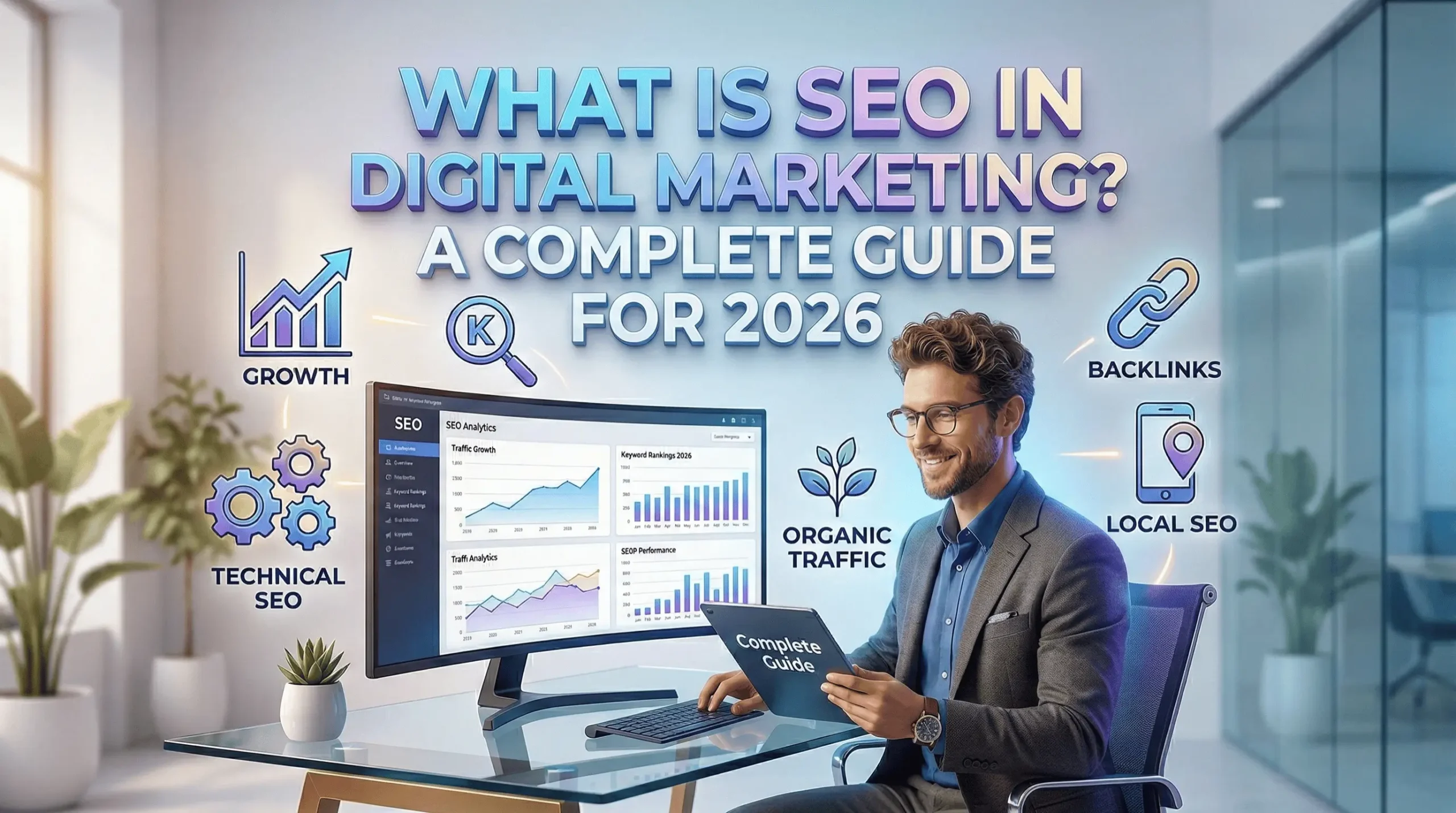
What is SEO in Digital Marketing? A Complete Guide for 2026
In today’s digital world, having a strong online presence is essential for any business. Whether you’re running a startup or a large corporation, the way people find your website directly impacts your success. One key aspect of improving your website’s visibility is SEO (Search Engine Optimization).
As an SEO strategist with years of experience helping businesses grow online, I understand how overwhelming it can be to navigate the vast world of SEO. In this article, I’ll break down what SEO is, why it’s crucial for digital marketing, and how it can help elevate your business to the top of search engine rankings. If you’re starting your SEO journey or looking to refine your strategy, this guide will provide the essential insights you need.
What Is SEO in Digital Marketing?
Search Engine Optimization (SEO) is the practice of optimizing a website to improve its visibility on search engine results pages (SERPs), thereby driving organic (unpaid) traffic to the site. SEO encompasses both technical and creative elements, aiming to enhance user experience, provide relevant content, and ensure your website is easily discoverable by search engines like Google.
The Core of SEO
SEO involves several strategies and practices that focus on improving how a website is seen by both users and search engines. These include:
On-Page SEO: Optimizing individual pages of a website (content, keywords, meta descriptions, etc.).
Off-Page SEO: Building authority and trust through backlinks from other websites.
Technical SEO: Improving website speed, mobile-friendliness, site architecture, and making it easier for search engines to crawl your site.
Why Is SEO Important for Digital Marketing?
In digital marketing, SEO plays a central role in ensuring your content is visible to potential customers. Without a solid SEO strategy, your website could be buried on the 10th page of search results, limiting your traffic and growth opportunities.
Here are a few reasons why SEO is vital for digital marketing:
Increased Organic Traffic: With the right SEO strategy, your website can rank higher in search results, bringing in more visitors who are looking for what you offer.
Cost-Effectiveness: Unlike paid ads, organic traffic through SEO is free. The long-term ROI of SEO makes it a cost-effective marketing strategy for sustainable growth.
Builds Trust and Credibility: Websites that rank higher in organic search results are often viewed as more credible and authoritative by users.
Long-Term Results: SEO is not a one-time effort. Once optimized, your site can continue to generate traffic for months or even years.
Core Components of SEO in Digital Marketing
Effective SEO covers a variety of aspects. Below are the core components involved in crafting a successful SEO strategy:
1. On-Page SEO
On-page SEO refers to the optimization of content and HTML source code within your website. Key aspects include:
Keyword Research: Finding the right keywords to target based on your audience’s search behavior.
Title Tags & Meta Descriptions: These elements help search engines and users understand the content of your page.
Content Optimization: High-quality, engaging content optimized for target keywords is essential for ranking.
Header Tags: Proper use of H1, H2, and H3 tags can improve readability and SEO.
2. Off-Page SEO
Off-page SEO involves activities outside of your website that help build authority and increase your site’s trustworthiness. This primarily includes:
Backlink Building: Getting high-quality links from authoritative sites boosts your credibility.
Social Signals: Active social media profiles can influence your SEO performance indirectly.
Local Citations: Listing your business on local directories such as Google My Business can help with local SEO.
3. Technical SEO
Technical SEO ensures that search engines can crawl and index your website properly. Key aspects include:
Website Speed: Search engines favor sites that load quickly, improving both rankings and user experience.
Mobile Optimization: With mobile-first indexing, Google prioritizes mobile-friendly websites.
Site Architecture: A well-structured website helps search engines understand your content.
Secure Website (HTTPS): Websites with HTTPS are ranked higher and provide a more secure experience for users.
4. Local SEO
Local SEO is essential for businesses that cater to a specific geographic area. By optimizing your website for location-based searches, you increase your chances of being discovered by users in your area. This includes:
Google My Business: Claiming and optimizing your profile ensures your business shows up in local searches.
Local Listings & Citations: Being listed on local business directories enhances your visibility in local search results.
Localized Content: Creating content tailored to your audience’s location boosts your relevance.
How Does SEO Work?
Understanding how SEO works is crucial for improving your website’s ranking. Search engines like Google use complex algorithms to determine the relevance of web pages based on several factors. Here’s how the process typically works:
- Crawling: Googlebot (or search engine spiders) scans websites to discover content. These bots follow links from one page to another, gathering information about each page.
- Rendering: After Googlebot crawls a website, it processes and renders the page by executing JavaScript and applying CSS. This allows Google to see the content as users would, including dynamic elements like images, forms, and interactive features, ensuring the search engine fully understands the page’s content and structure.
- Indexing: After crawling, search engines store and categorize the information in an index. This index is a massive database of content that search engines use to match users’ search queries.
- Ranking: When a user types a query into the search engine, Google ranks the indexed pages based on factors like relevance, authority, user engagement, and technical health.
Measuring SEO Success
To determine if your SEO efforts are working, you need to measure key metrics. Here are some indicators to track:
Organic Traffic: The volume of visitors coming to your website from search engines.
Keyword Rankings: Track how well your target keywords are performing.
Click-Through Rate (CTR): The percentage of people who click on your website after seeing your listing in search results.
Backlinks: The quantity and quality of backlinks you’ve earned from authoritative websites.
Conversions: Ultimately, the goal is to turn visitors into leads or customers, so measuring conversion rates is key.
FAQs:
1. What is SEO in simple terms?
SEO (Search Engine Optimization) is the practice of improving a website’s ranking on search engines like Google to increase visibility and drive more organic traffic to your site.
2. How does SEO work in digital marketing?
SEO works by optimizing your website’s content, structure, and backlinks to rank higher on search engine results pages (SERPs). It helps businesses become more visible to users actively searching for products, services, or information.
3. How long does it take to see results from SEO?
SEO is a long-term strategy, and it typically takes 3 to 6 months to see significant improvements in rankings and traffic. However, the results are sustainable and long-lasting.
4. Can SEO help small businesses grow?
Yes! SEO is particularly effective for small businesses looking to attract local customers. By focusing on local SEO and targeting the right keywords, small businesses can significantly increase their visibility in search results.
5. What are the best SEO practices for beginners?
For beginners, focus on basic SEO practices like optimizing your website’s meta tags, improving your content, using the right keywords, and ensuring your site is mobile-friendly. Regularly producing high-quality content will also help in the long run.
Conclusion
Understanding SEO and implementing it effectively is one of the best ways to improve your online presence, increase organic traffic, and grow your business. Whether you’re running a small local business or a global e-commerce store, SEO is an indispensable tool in digital marketing.
By following best SEO practices and staying updated with algorithm changes, you can ensure your website ranks higher, gains credibility, and reaches your target audience effectively.
If you’re ready to improve your digital presence and see results, don’t hesitate to get in touch. Whether you’re new to SEO or need help with advanced strategies, I’m here to guide you through every step of the process.