


Beauty Booth SEO Case Study
Scaling Organic Traffic, Rankings, and Revenue Through Strategic E-Commerce SEO
Project Overview
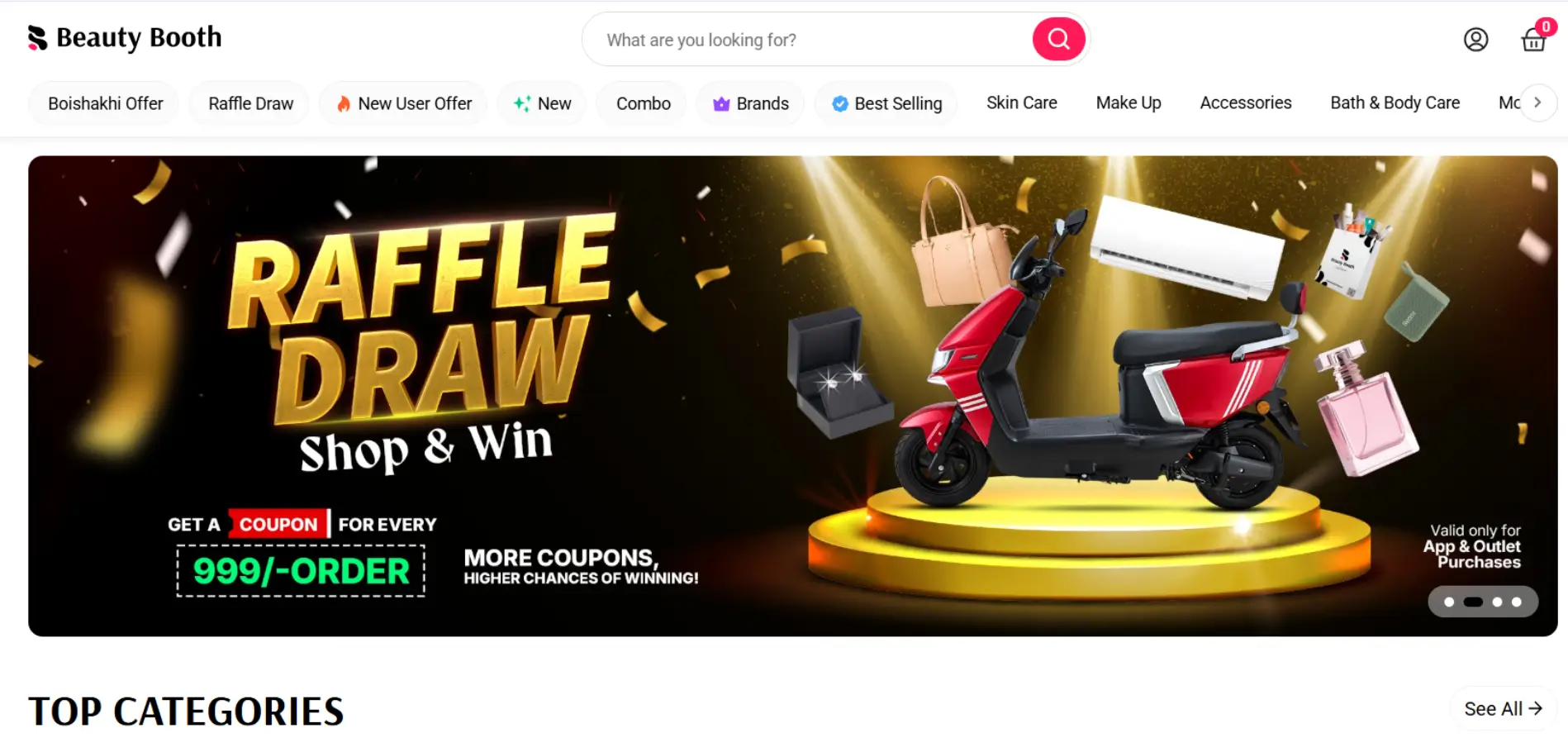
Beauty Booth is an e-commerce platform in the skincare and beauty niche, targeting high-intent buyers across Bangladesh. The goal was simple but challenging:
Turn a low-visibility store into a high-performing organic acquisition channel.
At the start, the site had minimal keyword presence, weak content structure, and almost no authority signals — especially on core category pages like skincare.
The Challenge
When we first audited the site, several critical issues stood out:
- No structured content strategy for category, brand, or product pages
- Weak keyword targeting and missing search intent alignment
- Almost zero backlinks and domain authority
- Poor internal linking structure
- Category pages with little to no SEO value
For example, the skincare category page had:
- 0 organic keywords
- 0 traffic
- No backlinks or referring domains
This meant the site wasn’t even in the competition.
Our Strategy
Instead of random optimization, we built a structured, scalable SEO system.
1. Content-Led E-Commerce SEO
We focused on three core content pillars:
- Category Pages
- Brand Pages
- Product Pages
Each page type was treated differently based on user intent.
What this really means is:
We didn’t just write content — we mapped content to buying stages.
2. Keyword Research + Intent Mapping
We built detailed keyword clusters based on:
- Commercial keywords (buy, price, best)
- Informational queries (benefits, usage, comparisons)
- Brand + product searches
Each page had:
- Structured H1–H3 hierarchy
- FAQ sections
- SERP-based content outline
3. On-Page SEO at Scale
We created and optimized:
- 47+ category pages (BD + QA markets)
- 15+ brand pages (BD) and 24+ (QA)
Every page included:
- Optimized meta tags
- Proper keyword placement
- Clean URL structure
- Internal linking
4. Internal Linking System
This was one of the biggest growth drivers.
We connected:
- Category → Brand → Product
- Blog → Product
- Product → Related Products
Because in e-commerce SEO, internal linking isn’t optional — it’s the backbone.
5. Foundational Backlink Strategy
We built 200+ foundational backlinks, including:
- Profile links
- Web 2.0
- Article submissions
- Bookmarking
- PDF & image submissions
- Social signals
This helped build trust and initial authority.
Execution Highlights
- Full on-page optimization across key pages
- Content rollout based on keyword clusters
- Continuous content expansion
- Product SEO guidelines implementation
- Migration handling without traffic loss
Results
Now let’s talk about what actually changed.
Overall Growth
After implementation:
- Organic traffic increased significantly post-migration
- Keyword rankings expanded across all buckets (Top 3, Top 10, Top 20)
Traffic continued to grow steadily, even after structural changes.
Category Pages Growth
This is where things got interesting.
- Clicks increased by 327.49%
- Impressions increased by 197.62%
Meaning:
Category pages went from invisible → major traffic drivers.
Brand Pages Growth
- Clicks increased by 83.49%
- Impressions increased by 127.66%
Brand searches started converting into actual traffic.
Product Pages Growth
- Clicks increased by 40.49%
- Impressions increased by 48.71%
Product-level SEO started capturing bottom-funnel traffic.
Page-Level Transformation Example
The skincare category page:
Before:
- 0 traffic
- 0 keywords
After:
- 34+ keywords
- 193+ organic traffic
This single page alone shows the impact of structured SEO.
What Made This Work
Here’s the real takeaway.
It wasn’t one tactic — it was the system:
- Intent-driven content
- Scalable page structure
- Strong internal linking
- Consistent content expansion
- Foundational authority building
Most e-commerce sites fail because they treat SEO as “product upload + keywords.”
We treated it as a growth engine.
What’s Next
To push growth further:
- More product-focused content
- Advanced backlink acquisition
- Continuous content updates
- Scaling linkable assets
- Expanding SERP coverage
Final Thoughts
This project proves one thing clearly:
If you structure SEO properly, even a low-performing e-commerce site can become a strong organic channel.
No shortcuts. Just strategy + execution.

